Alliance Communications Efficiency

Although alliance systems can lead to great cost and time savings, it is important to pay particular attention to internal communications and authorisation systems.

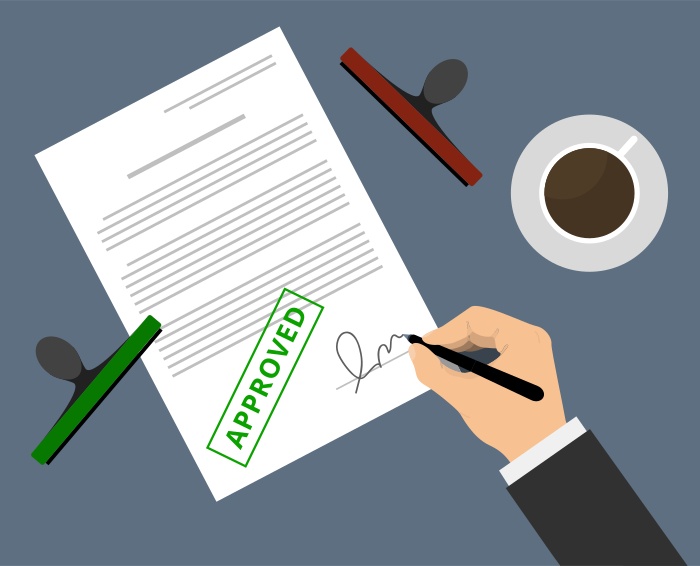
It can take a lot longer to get information circulated or authorisations done properly compared to if everyone was from the one company.

Verification of designs can be particularly time consuming as the designs may need to pass between lots of departments.

It can help to indicate clearly on the communications or forms who is responsible for replying or taking action, when that action is due by, and who they should return it to or pass it on to when they are completed. For other people copied in the communication, make sure it is clear that they are only copied for information only and do not need to act or reply.

Keeping urgent or important labels for truly important communications can speed the process.

If necessary, make a, simple to follow, one page procedure for processing documents (so that people can know what to do easily).

Tagged with:

Filed under: CommunicationDocumentationTime

Good Change Management System

Instigate and enforce a good change management system

Change management coordinators and people who have to approve changes spend a lot of time chasing signatures, putting information in to spreadsheets, and general admin duties that could be automated.

It is easy to lose track of changes, or not document them properly.

Documentation for changes often lags a long way behind the actual change occurrence.

Many companies use a collection of spreadsheets. This can be cumbersome because different copies are in different locations, people forget to fill in details. The change coordinator ends up having to fill in all details (when that person may not understand the change).

A very good system would only need the coordinator to set up the initial templates in the system and file hard copies of signatures on approvals as they are received.

Ideally want a system in which the internal instigator can log-in, tick boxes to show effects of changes, type the title and description, allocate who is responsible to enter costs and who should sign. The system should then send messages to those people to review the item fill in details (and attach supporting docs) and approve (all on the system), with printouts available for the person to print, sign, and send to coordinator to file (if required). Ideally want instigators to be able to do all with little work from coordinator except for filing hard copies.

It is even better if your system allows for electronic authorisation, eliminating the need to print and sign papers.

Often the problem with a system is that emails get sent and people don’t notice them, leading to change documentation to be overlooked. This can be avoided with a log-in system that lists what tasks are to be completed for that person.

A system should have a way of enforcing adherence. Ideally where each person who may have to authorise a change has an icon which tells them when something is waiting their authorization.

I system could be a simple database, or it could be a complete enterprise system. Having a system is the important part.

If a senior manager calls up and wants a report on all the changes on a project sorted by cost, with a good system you should be able to give it to him within a few minutes. If your change management system is just on a collection of spreadsheets, this may not be possible. Even better, a good system would allow the manager to log-in and look at the reports themselves.

Tagged with:

Filed under: CommunicationDesignDocumentationPlanningTime

  
Looking for a reliable WordPress hosting plan? We found the best!